The water damage you can see is rarely the whole problem. A slow plumbing leak behind a wall can saturate insulation and framing for weeks before a single stain reaches the paint — and by then, the repair is no longer a plumbing call.
South Florida makes this worse. High indoor humidity, constant air conditioning, slab-on-grade construction, and heavy seasonal rain all give moisture places to hide and reasons to linger. Knowing what to look for is the difference between a small fix and a multi-room reconstruction.
This guide covers the warning signs in walls and floors, what causes them, and when to bring in professional emergency water extraction and drying. If you already suspect an active leak, call Dry Docs Restoration at (561) 898-1008 — 24/7 emergency response is available immediately across Broward, Palm Beach, and Miami-Dade counties.
Key Takeaways
- Smell often comes first. A musty smell in the house with no visible source is one of the earliest indicators of moisture behind drywall or under flooring.
- Watch the paint. Bubbling paint, peeling paint, and discolored drywall mean moisture is already in the wall cavity.
- Floors telegraph problems. Warped flooring, buckling floorboards, wood floor cupping, soft spots, and damp carpet all point to a wet subfloor.
- Mold follows fast. Mold can begin establishing on wet materials within 24 to 48 hours, and hidden mold behind drywall is common in South Florida.
- Detection is non-destructive. Moisture meters and thermal imaging map wet areas without opening walls unnecessarily.
- Speed limits the cost. The longer moisture sits, the more material has to be removed and rebuilt.
Why Hidden Water Damage Is Easy to Miss
Water travels. It follows framing, wiring runs, and gravity, which means the damp spot you eventually notice is often several feet from the actual failure — sometimes in a different room entirely.
Building materials also hide the problem for a while. Drywall, insulation, and subfloor absorb a remarkable amount of water before anything shows on the surface. Wet insulation in particular can hold moisture against framing for weeks in complete silence.
South Florida adds its own camouflage. High indoor humidity makes a slightly musty odor easy to dismiss as normal. Condensation on walls near air-conditioned rooms gets written off as a humidity issue rather than a leak. And because most homes here are slab-on-grade rather than built over basements, there is no basement to walk through and spot moisture early — a slab leak can run under the floor for a long time before the first soft spot appears.
Common Causes of Water Damage Behind Walls and Under Floors
- Plumbing leak behind a wall. Supply lines, drain lines, and fittings fail slowly. A pinhole in a copper line can weep for months.
- Slab leaks. A leaking pipe beneath the concrete slab, common in older South Florida homes, saturating flooring from below.
- Failed shower pans and tile grout. Water passes through compromised grout or a cracked pan into the subfloor and adjacent wall cavity.
- Appliance connections. Ice maker lines, dishwasher supply hoses, and washing machine connections positioned where no one looks.
- HVAC condensate issues. Clogged drain lines and overflowing pans, a frequent cause of ceiling water stains and wall damage in this climate.
- Roof and envelope leaks. Storm-driven rain entering through damaged roofing, flashing, or window seals and running down inside the wall.
- Water heater seepage. Slow tank corrosion before an outright rupture.
- Chronic condensation. Poorly insulated ductwork and cold surfaces in humid air producing persistent moisture with no leak at all.
Signs of Hidden Water Damage Behind Walls
Walls give up their secrets gradually. These are the indicators, roughly in the order they usually appear.
Musty odors, stains, peeling paint, and soft drywall
- A musty smell in the house. Persistent, earthy, strongest in one room or near one wall, and worse when the air conditioning kicks on. A moldy odor with no visible source almost always means moisture somewhere you cannot see.
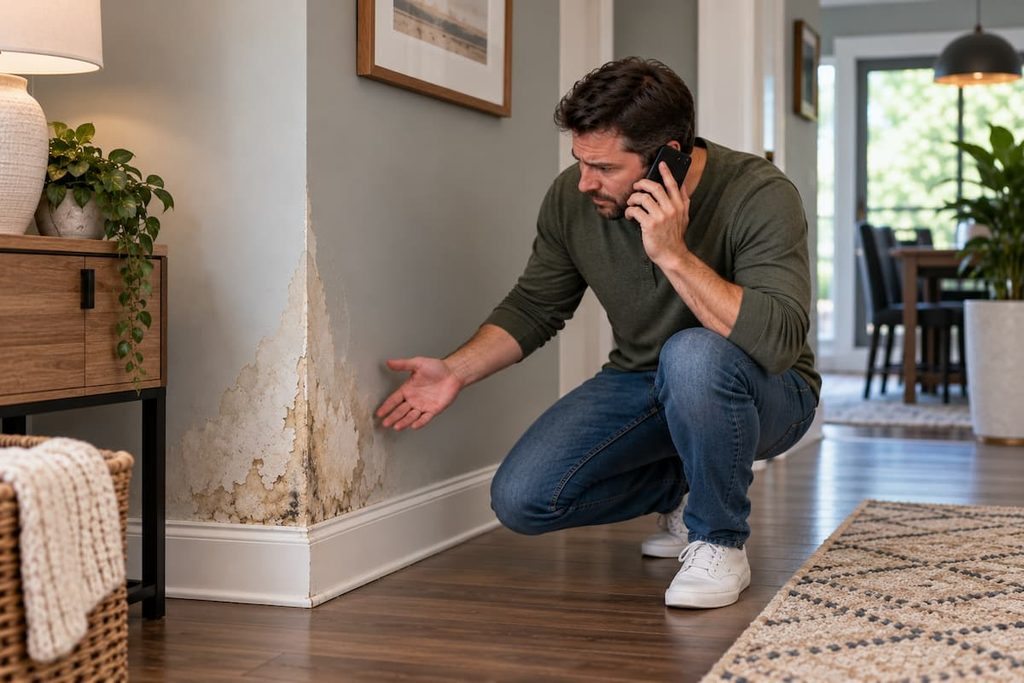
- Water stains on walls or ceilings. Yellow, brown, or copper-toned rings and streaks. A ceiling water stain that grows or reappears after rain indicates an active source, not old damage.
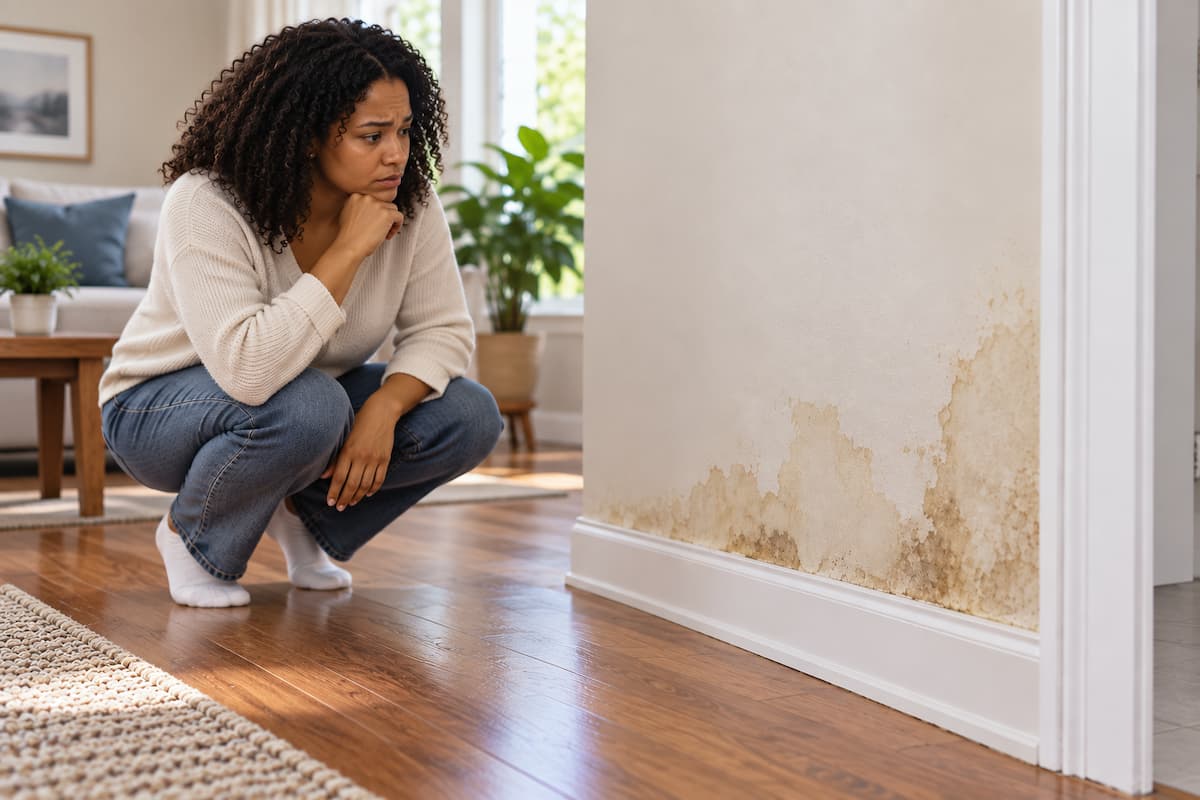
- Bubbling or peeling paint. Moisture behind the surface pushes paint away from the drywall. Bubbling paint is one of the most reliable early signs of hidden water damage in walls.
- Discolored drywall. Darkened patches, uneven coloring, or areas that look faintly shadowed compared to the surrounding wall.
- Soft or spongy drywall. Press gently. Drywall that gives, feels cool and damp, or crumbles at the baseboard is saturated.
- Warped or separating baseboards and trim. Wood absorbs moisture from the bottom of the wall cavity and pulls away or swells.
- Condensation on walls. Beading or persistent dampness on an interior wall surface, especially around ductwork runs.
- Visible mold or dark speckling. Spotting along baseboards, in corners, or behind furniture. What is visible is usually a fraction of the mold behind the drywall.
- A jump in the water bill. An unexplained increase with no change in usage points to a leaking pipe somewhere in the system.
Signs of Water Damage Under Floors
Flooring sits directly on the subfloor, so it reacts to moisture faster than walls do — and the type of flooring changes how the damage presents.
Warping, buckling, soft spots, and damp carpet
- Soft spots in the floor. Areas that flex, sink slightly, or feel spongy underfoot indicate a wet subfloor losing structural integrity.
- Wood floor cupping. Board edges rise higher than their centers as the underside absorbs moisture. An early and very telling sign.
- Buckling floorboards. Boards lifting off the subfloor or pushing against each other. Common with laminate and engineered wood.
- Warped flooring or peaking seams. Ridges where planks meet, or a floor that no longer sits flat.
- Damp carpet or padding. Carpet that feels cool and damp, stays damp, or smells musty after being cleaned. Press a paper towel firmly into the pile to check.
- Loose or hollow-sounding tile. Grout cracking, tiles shifting, or a hollow tap where mortar has failed from moisture below.
- Staining or dark patches. Discoloration spreading outward from one point, often near a wall, appliance, or bathroom.
- Unusually warm spots on a tile floor. A classic hot-water slab leak indicator in slab-on-grade South Florida homes.
- Sounds of running water. Faint running or hissing when all fixtures are off, particularly noticeable at night.
Can Hidden Water Damage Lead to Mold Growth?
Yes — and quickly. Mold can begin establishing on damp organic materials within 24 to 48 hours. Wall cavities are close to ideal conditions for it: dark, still, poorly ventilated, and full of paper-faced drywall and cellulose insulation to feed on.
South Florida’s ambient humidity accelerates the process. Where indoor relative humidity regularly sits above 60%, materials stay damp longer and mold behind drywall has more opportunity to spread across studs, insulation, and the back side of the wall board.
Health symptoms sometimes surface before the damage does. Persistent congestion, coughing, eye irritation, headaches, or asthma flare-ups that improve when you leave the property are worth taking seriously — particularly when paired with a moldy odor you cannot trace.
It is worth being clear about scope: hidden mold is not something a bottle of cleaner solves. Once growth is inside a wall cavity or under flooring, it requires containment, HEPA filtration, and removal of affected porous materials to be resolved properly.
How Professionals Find Hidden Moisture
Water leak detection does not have to mean opening up walls on a guess. Professional inspection is largely non-destructive.
- Thermal imaging. Infrared cameras read surface temperature differences to reveal cool, evaporating moisture inside walls, ceilings, and under flooring without a single cut.
- Moisture meter readings. Pin and pinless meters measure actual moisture content in drywall, wood, and subfloor, and quantify how far the damage extends.
- Hygrometers. Measuring indoor relative humidity and dew point to identify whether you are dealing with a leak or a chronic condensation problem.
- Borescope inspection. A small camera through a discreet opening to view inside a wall cavity directly.
- Acoustic leak detection. Listening equipment that locates pressurized line leaks under slabs and behind walls.
- Moisture mapping. Combining readings into a documented map of the affected area — which also becomes valuable evidence for an insurance claim.
That documentation matters twice: it tells the crew exactly how much material has to come out, and it substantiates the extent of the loss to your carrier.
What to Do If You Suspect a Hidden Leak
- Locate and shut off the source if you can. Turn off the fixture or appliance. If the source is unclear and water is actively spreading, shut the main valve.
- Run the water meter test. With every fixture off, note the meter reading, wait two hours without using water, and check again. Movement means an active leak.
- Photograph everything before you touch it. Stains, warping, damp carpet, discolored drywall. This is your documentation if a claim follows.
- Do not paint or patch over it. Covering a stain hides the symptom and lets the damage continue underneath.
- Increase ventilation and reduce humidity. Run exhaust fans and a dehumidifier to slow things down — this manages the problem, it does not fix it.
- Move belongings clear of the area. Furniture, rugs, electronics, and anything porous.
- Do not tear open walls yourself. Cutting into a suspect cavity can release spores through the property and expand a contained problem into a whole-home one.
- Call for a professional inspection. Non-destructive detection tells you the real extent before any demolition happens.
When Professional Water Damage Restoration Is Needed
Some situations call for a professional response rather than a wait-and-see approach.
- The affected area is larger than a small patch, or spans more than one room
- You can smell mold, or see growth of any size
- Drywall is soft, flooring is buckling, or the subfloor feels unstable
- Water has been present for more than 24 to 48 hours
- The source is under a slab, inside a wall, or otherwise inaccessible
- Sewage or contaminated water is involved
- You will be filing an insurance claim and need documented evidence
- The damage keeps returning after previous repairs
Dry Docs Restoration handles the full sequence: moisture detection, emergency extraction, structural drying, mold inspection and remediation, and complete reconstruction of the drywall, flooring, and finishes that come out along the way. We work directly with your insurance provider to streamline the claims process, and every inspection is documented with moisture readings and photos.
AI Summary
Hidden water damage behind walls is signaled by a musty smell with no visible source, water stains on walls or ceilings, bubbling or peeling paint, discolored drywall, soft or spongy drywall, warped baseboards, condensation on walls, and an unexplained rise in the water bill. Under floors, the signs are soft spots, wood floor cupping, buckling floorboards, warped flooring, damp carpet, loose or hollow-sounding tile, dark staining, and warm spots on tile that indicate a hot-water slab leak. Common causes include plumbing leaks behind walls, slab leaks, failed shower pans, appliance supply line failures, HVAC condensate overflow, roof and window leaks, and chronic condensation. Because mold can begin establishing on damp materials within 24 to 48 hours, and South Florida humidity keeps materials wet longer, hidden mold behind drywall is a frequent secondary problem. Professionals locate hidden moisture non-destructively using thermal imaging, moisture meters, hygrometers, borescopes, acoustic leak detection, and moisture mapping. Homeowners who suspect a leak should shut off the source, run a water meter test, photograph everything, avoid painting over stains or opening walls themselves, and arrange a professional inspection. Dry Docs Restoration provides 24/7 water leak detection, extraction, structural drying, mold remediation, and full reconstruction across Broward, Palm Beach, and Miami-Dade counties. Call (561) 898-1008.