

Personal Property / Contents
Damaged belongings — furniture, electronics, and other personal items — are often covered under a separate contents limit within your policy.
Coverage for water, mold, sewage, fire, and smoke damage varies by policy. Learn what homeowners insurance typically covers, where gaps exist, and how to understand your specific coverage.
Every policy is different, but most standard homeowners policies are built around these general categories of coverage:
Damaged belongings — furniture, electronics, and other personal items — are often covered under a separate contents limit within your policy.
Sewage backup is frequently excluded from a standard policy and often requires a separate rider or endorsement to be covered at all.
If your property becomes uninhabitable during repairs, many policies help cover temporary housing and related costs.
Does homeowners insurance cover fire? Fire and smoke damage are among the most consistently covered perils in a standard policy, though the extent of coverage still depends on your specific terms.
Will homeowners insurance cover mold? Sometimes — but coverage is often limited, capped, or excluded entirely, especially if the mold is linked to a maintenance issue rather than a sudden event.
Does homeowners insurance cover water damage? Often, yes — when it's sudden and accidental, like a burst pipe or a failed appliance hose. Gradual leaks are a different story (more on that below).
These are general categories only. Whether any of these apply to your situation depends entirely on the terms of your individual policy.
Just as important as knowing what’s covered is knowing what typically isn’t. Common exclusions and limitations include:
Exclusions and limits vary significantly by insurer and policy — always confirm the specifics with your provider or declarations page.
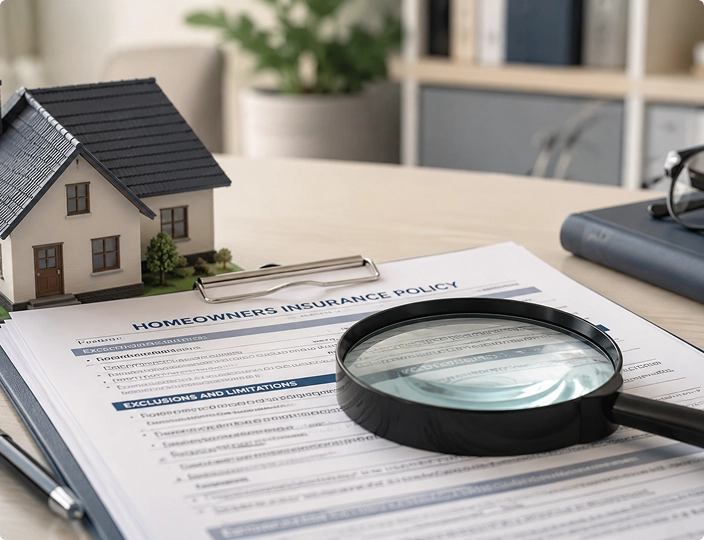
Your declarations page — usually the first few pages of your policy packet, or available through your insurer’s online portal, summarizes your coverage at a glance. When reviewing it, look for:

A denial isn’t necessarily the final word. Most policies give you the right to appeal, and an independent assessment can sometimes uncover damage or documentation the insurer’s initial review missed.
Insurance language isn’t always clear, and you shouldn’t have to guess what your policy does or doesn’t cover. Talk to a DryDocs specialist and get a straight answer.
Leave your details - we'll call you back and schedule your free on-site visit.
No obligation. We answer 24/7.
 Call Now


